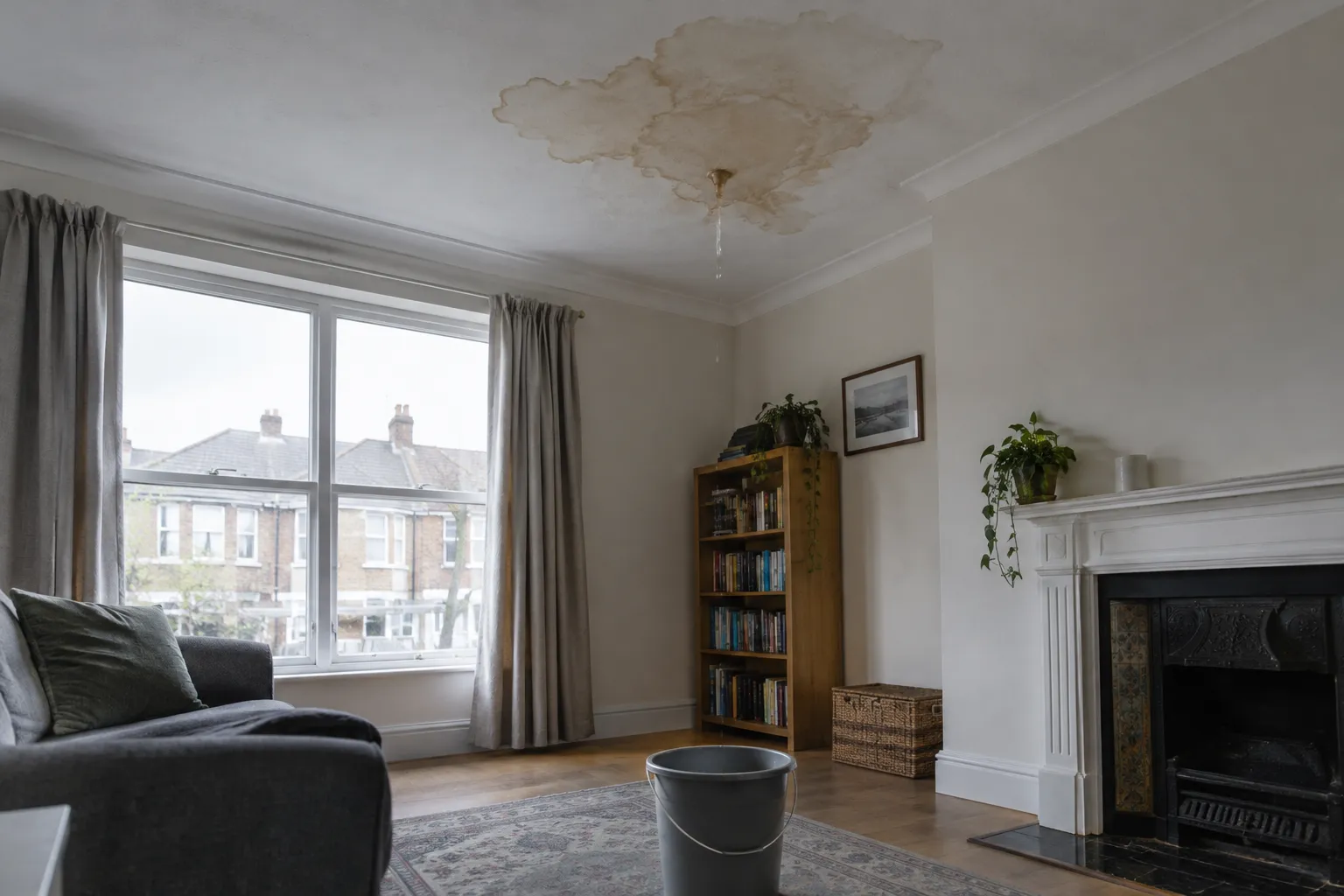
Water coming through a ceiling or down a wall is a roof leak that cannot wait for a routine booking. The first few minutes are about protecting the room and the people in it, not the roof itself: catch the water, move anything valuable, and treat any water near wiring or light fittings as a hazard. Once the room is safe, the next job is getting a roof repair and leak specialist out to find where the water is getting in and stop it. This page covers what to do while you wait, what not to do, and how to get a local specialist moving quickly.
What should I do if my roof is leaking right now?
Catch the water, move what you can out of the way, and leave the roof itself alone until someone can look at it safely. Put a bucket or bowl under the drip, and if a ceiling is bulging with trapped water, place a container underneath and make a small hole in the centre of the bulge with something like a screwdriver, so the water drains in a controlled way rather than bringing part of the ceiling down on its own.
Move furniture, electronics and anything that damp or damage would ruin away from the area. If the leak is near a light fitting, socket or switch, do not touch it, and consider switching off the electricity supply to that circuit, or the whole property, at the fusebox if you can reach it safely. Electrical Safety First advises switching off the supply at the consumer unit if it's safe to do so, and not touching anything that's wet or has been in contact with water until it's been checked. If you're at all unsure, treat it as a job for an electrician as well as a roofer.
Note roughly where the water is first appearing and when it's worst (heavy rain, wind from one direction, a thaw after frost). That detail helps whoever comes out find the source faster, since water can carry a surprising distance along a rafter, joist or roof felt before it drips, so the wet patch on the ceiling is not always directly under where it started.
Is it safe to deal with a leaking roof yourself?
No, not by going onto the roof. Health and Safety Executive guidance is blunt about this: don't go onto any roof in poor weather such as rain, ice, frost or strong wind, or when the surface is slippery, and avoid it after dark too, since you can't see what you're standing on. A wet or icy roof gives almost no grip, and falls from height are a common cause of serious injury.
What you can safely do is manage things from inside and from ground level: the bucket, the light drainage hole in a bulging ceiling, moving belongings, and switching off electrics near the damp patch. If you can see the roof from the ground or a safe window and something is obviously loose, like a tile slipping or flashing lifting, note it and mention it when you call for help, but don't go up a ladder in the rain to look closer. A local specialist with the right harness, ladder and roof access equipment can assess and carry out temporary weatherproofing far more safely than a homeowner on a wet roof.
How much does emergency roof leak repair cost, and how fast can someone come?
Price depends on how the specialist reaches the leak, how long it takes to find the source, and whether the fix is a temporary patch or needs reroofing work booked in afterwards. A specialist called out for an emergency leak usually prices an urgent visit and stopgap repair first, with a fuller quote for permanent work once the roof has dried out. Our roof repair cost guide covers typical ranges.
For how quickly someone can attend, that depends entirely on which local specialist has availability that day, so it's not something we can promise here. Once you send details through the quote form, a local specialist can usually get back to you quickly to arrange an emergency visit, especially if you flag that water is actively coming through.
Questions people ask
What should I do if my roof is leaking in the UK?
Catch the water in a bucket, move anything damp would damage, and treat any water near electrics as a hazard rather than touching it. Don't go onto the roof, especially in wet or dark conditions. Note where and when the leak is worst, then get a local specialist out to find the source and carry out a temporary repair to prevent more damp or structural damage.
Can you fix a roof leak while it's raining?
A temporary stopgap, like sealing a small section from the inside of a loft or bracing a bulging ceiling to drain safely, can sometimes be done while it's still raining. A proper repair on the roof itself usually has to wait until the rain stops and the surface is dry enough to work on safely, since a wet roof is too slippery to work on without unnecessary risk.
How long does an emergency roof leak repair take?
An initial emergency visit to find the leak and apply a temporary fix often takes an hour or two, depending on how accessible the roof is and how long the source takes to locate. If the leak needs a bigger repair, such as replacing damaged tiles, felt or flashing, that follow-up job can take longer and the specialist will quote for it separately.
Do I need to be home for an emergency roof leak repair?
For the initial callout, yes, someone usually needs to be there to let the specialist in, show them where the leak is showing inside, and discuss what they find. For any larger follow-up repair booked in afterwards, that depends on the access the roof needs and what the specialist agrees with you in advance.
Sources
Updated