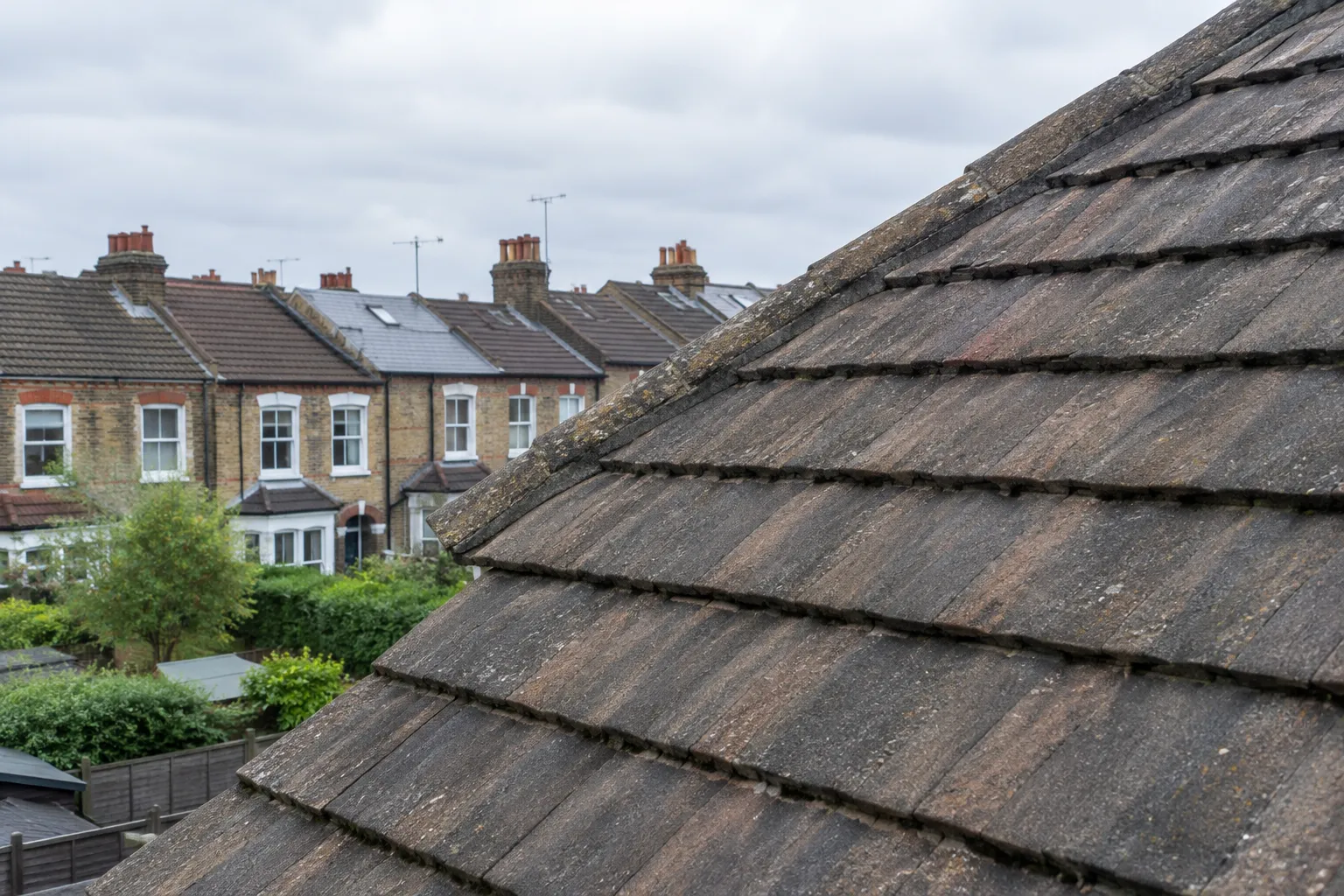
Tiles roof means the covering on top of a pitched roof, usually clay, concrete or slate tiles laid in overlapping rows on battens, though the same search also covers corrugated and metal roof sheets used on outbuildings, garages and some extensions. The right material depends on your roof's pitch, your budget, what your neighbours have, and in some conservation areas, the rules on what you're allowed to use. This page covers the main tile and sheet types, what sits underneath them, how long each one lasts, and how to order the right amount before you get quotes.
If you're not sure which material fits your roof, a local specialist can look at what's there now and quote for a match or a change. See the roofing guide for Wandsworth for the other jobs a roof might need, from leaks to gutters.
How to install corrugated bitumen roofing sheets?
Corrugated bitumen sheets are laid from the eaves upward, overlapping each sheet by one full corrugation at the sides and by 17 to 30 cm at the ends depending on the pitch, then fixed with around 20 nails or screws per sheet. The lower the pitch, the bigger the overlaps need to be, and roofs under 10 degrees need a solid deck underneath rather than just battens.
Manufacturer fixing guides for this type of sheet set out the detail: fix every corrugation at the eaves, at overlaps and at the ridge, and every second corrugation at the purlins in between, staggering the fixings row to row. A verge piece closes off the sides, and a ridge piece, supported on its own batten, overlaps the top sheet by at least 12 cm. Purlins (the horizontal supports under the sheets) sit at closer centres on shallower roofs, commonly 43 cm apart below 15 degrees and 61 cm apart above it. Prevailing wind direction decides which way you start laying, so the overlaps shed water and don't catch the wind underneath. This is a job most people get a specialist to do, since getting the overlaps and fixings wrong is how these roofs leak.
How much is a 20 ft sheet of metal roofing?
UK suppliers price corrugated and box profile metal roofing sheets by the metre rather than by the foot, so a 20 ft sheet (roughly 6.1 metres) typically costs somewhere in the range of £50 to £100 for the sheet alone, depending on the steel thickness and coating. A plain galvanised sheet sits at the lower end of that range; a polyester-coated or thicker sheet costs more.
That figure is for material only, from published supplier price lists, and it moves with steel prices and the finish you pick. It doesn't include fixings, flashing, labour or waste, and corrugated sheets for a house roof extension are usually ordered cut to the exact rafter length rather than in fixed foot sizes. A local specialist measures the roof and quotes a price for sheets, fixings and fitting together, which is the only way to get a figure for your job rather than a guide price. For a wider sense of what roofing work tends to cost in Wandsworth, see the roof repair cost guide.
What's underneath roof tiles?
Underneath the tiles themselves sit, in order: battens (timber strips that give the tiles something to hook onto), an underlay or roofing felt that stops water getting further in if a tile slips or cracks, and then the rafters that carry the whole roof structure. At junctions such as chimneys, valleys and where a roof meets a wall, flashing (strips of lead or another weatherproof material) seals the gap the tiles can't cover on their own.
Battens are nailed across the rafters at a fixed spacing, called the gauge, that matches the tile being used, and they also create a small air gap under the tiles for ventilation and drainage. The underlay goes on first, laid over the rafters before the battens go on top of it, so any water that gets past a damaged or dislodged tile runs down the underlay and off the roof rather than into the loft. Flashing isn't part of the tiling itself, but a tile roof without proper flashing at its junctions is one of the more common places a roof starts to leak.
How many years will a tile roof last?
A concrete tile roof typically lasts 30 to 50 years, while clay tiles and natural slate commonly reach well over 100 years when properly installed and maintained. The tiles themselves often outlast the underlay and battens beneath them, which is why older roofs sometimes need the felt and battens renewed while the tiles are stripped, checked and relaid.
How long a roof actually lasts also depends on care and upkeep: loose tiles, cracked flashing and blocked valleys left unrepaired let water in and shorten the life of everything underneath. Concrete tiles are more porous than clay or slate and can need occasional resealing to keep performing well. If you're deciding between materials for a full re-roof, the specialist you get a quote from can tell you what's realistic for your roof's pitch, aspect and the materials already on neighbouring houses.
Questions people ask
What are fake slate roof tiles called?
They're usually called artificial, synthetic or composite slate, most often fibre cement or a resin-and-recycled-slate composite, made to copy natural slate's look at a lower weight and often a lower cost. They're generally lighter and quicker to install than real slate, but they don't have exactly the same appearance or lifespan, so a conservation area may require the real thing instead.
What is the standard size of a roof tile?
There's no single standard size. UK plain tiles are commonly 265 x 165 mm, and interlocking concrete tiles are commonly around 420 x 330 mm, covering more roof per tile. A profile tile such as Redland's 50 Double Roman measures close to 418 x 330 mm. The size decides how many tiles cover a square metre and the batten spacing, so matching an existing roof means matching the profile and size, not just the colour.
What is a slate roof?
A slate roof is covered in slate, a natural stone that splits into thin, flat pieces, laid in overlapping rows and fixed with nails rather than the interlocking systems most concrete and clay tiles use. It's valued for how long it lasts and how it weathers, and it's common on older housing stock and in conservation areas where another material isn't allowed. It's heavier than most tiles per square metre, so the roof structure needs to be built or checked to carry that weight.
How long will a slate tile roof last?
A well-installed, maintained natural slate roof commonly lasts 80 to over 100 years, longer than concrete tiles and most other roofing materials, since slate resists weathering and doesn't absorb water the way concrete does. The nails holding it can corrode well before the slate itself wears out, a problem called nail sickness, which lets slates slip even though they're otherwise sound. That's worth checking on an older slate roof before deciding it needs replacing.
What are the specifications of Marley Modern roof tile?
The Marley Modern is a concrete interlocking roof tile measuring 420 x 330 mm, covering 9.9 to 10.7 tiles per square metre depending on the headlap, with a maximum batten gauge of 345 mm and a minimum pitch of 17.5 degrees. It's sold in six colours and is one of the most widely used interlocking tiles on UK roofs, so merchants carry compatible fittings and matching an existing roof is usually straightforward. Redland makes a similar range, so a specialist can often offer more than one brand.
Sources
- Marley, Modern concrete interlocking roof tile specification
- Marley, parts of a pitched roof
- BMI Redland, 50 Double Roman technical data sheet
- BMI Redland, clay and concrete plain roof tiles
- Onduline UK, Onduline Classic installation guide
- Wikipedia, Roof tiles
- Designing Buildings Wiki, Roof tiles
- Published price listings from UK roofing sheet suppliers, checked October 2026
Updated